
Engineers and asset managers face challenges relating to the age, over-use and deterioration of many bridges and structures and the difficulty in gaining access to inspect and maintain the structures.
1. Protecting Ageing Infrastructure
Most bridge owners around the world face the challenge of keeping structures in service that are approaching or have exceeded their design life, and are carrying far greater loads than they were designed for.
They often have only limited as-built and maintenance records and face increasingly strict legislative requirements in terms of safety and growing commercial pressures in terms of ensuring availability.
In most countries, bridges are ageing and deteriorating faster than they can be refurbished or replaced. In the U.S, 42 percent of all bridges are at least 50 years old, and 7.5 percent of the nation’s bridges, are considered structurally deficient. Traffic demand is expected to grow in most regions – for example European passenger and freight transport is expected to increase at a rate of 4 to 5 percent per year.
Faced with these challenges, wholescale reconstruction is not an option and extending the life of existing assets is the only realistic choice. This can involve repair, refurbishment and upgrading, but such measures are expensive and disruptive and must be undertaken on a targeted basis.
How can wireless monitoring help?
Wireless monitoring can help protect bridge infrastructure by safeguarding vulnerable structures and extending asset life. Engineers and owners can:
- Get early warning of structural instability, distress & defects without leaving their desk.
- Combine various sensors such as crack sensors, temperature, cameras, strain, deformation, settlement, rotational movement to get the data they need.
- Install monitoring system in hours and stay informed for in excess of 10 years, with just a handful of site visits required.
2. Protecting People
The second big challenge faced by bridge owners and engineers is the need to protect the users of their assets, as well as third parties affected by them.
Bridge failures can kill people.
In August 2018 the Ponte Morandi motorway bridge in Genoa collapsed, killing 43 people – probably due to failure of encased cable stays and hidden construction defects.
Bridge owners in similar situations in future could consider the benefits of a long term structural health monitoring programme using wireless tilt sensors. Benefits of such an exercise could include identification of movement trends that are outside the normal bounds associated with factors such as traffic loading or wind – and can therefore alert engineers to potential structural failure.
Emergency monitoring
Such instruments can be installed quickly and provide data in near real-time. Senceive remote condition monitoring systems can be been installed within hours of an asset failure and can enable engineers and users to access the site and possibly continue using the bridge while it is assessed or repaired.
Inspecting bridges is dangerous – its safer to do it remotely
Sending people to site to inspect or test a structure is expensive, time-consuming and potentially dangerous. The data provided tends to be subjective and is representative of the bridge condition at the time and place inspected and does not provide a satisfactory basis for tracking changes in condition over time.
How can wireless monitoring help?
Wireless monitoring can help protect the people who use bridges, and the people responsible for maintaining them:
- Get the bigger picture from hundreds of sensors checking the performance of all the key structural elements – on a 24/7 basis
- Get automated near-realtime alarms when trigger levels are breached and early warning of structural instability, sudden impact damage and longer term distress – without leaving your desk
- Install an emergency monitoring kit within hours of an event to assess ongoing movement
- Fewer site visits means reduced risk exposure.

3. Challenging access & tough conditions
Many bridges are hard to access and highly exposed to all weather conditions. Surveys and inspections may required disruptive closures and expensive access equipment.
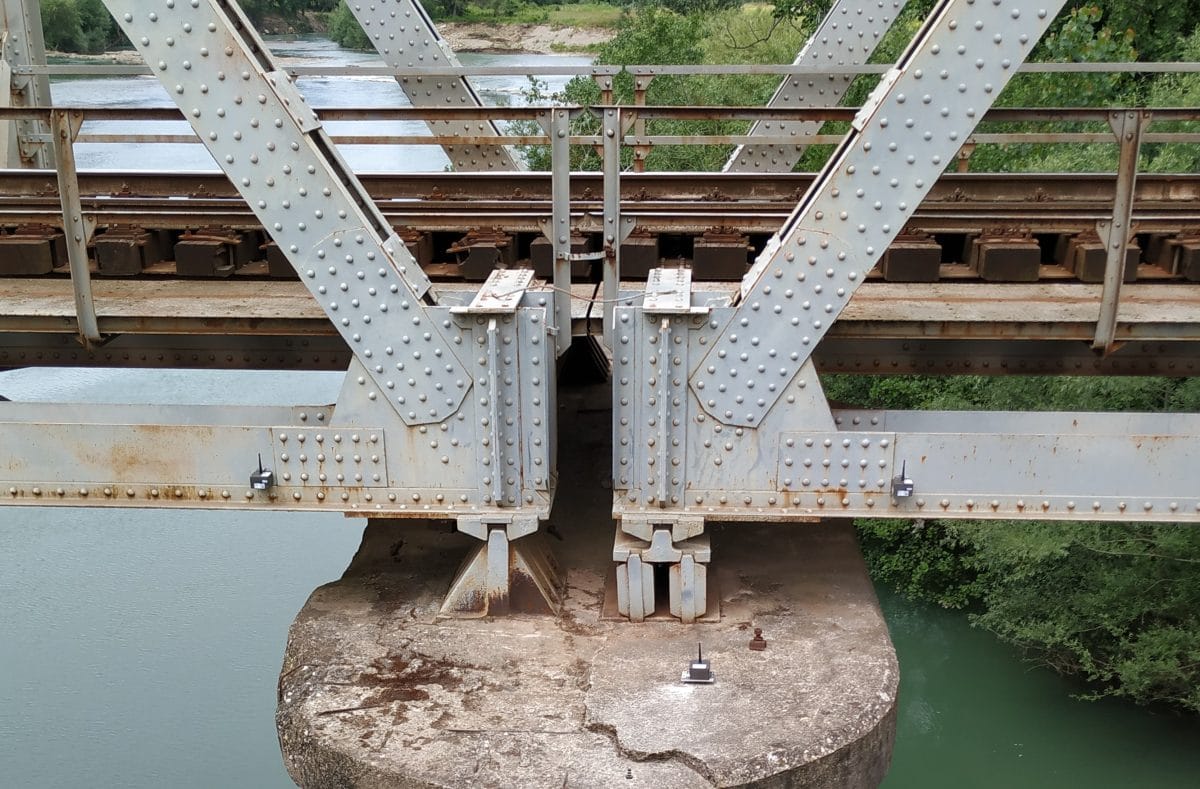
Senceive wireless monitoring systems provide an unrivalled choice of brackets and mounts for easy installation of sensors at any angle to any material including stone, steel, concrete or timber.
Measure where it matters most – the sensors are so small and robust they be installed right where you want information, whether that’s at the top of a pier, inside a box girder or on the soffit.
Wireless sensors don’t need wires. That means far less risk of accidental damage to your monitoring system. Senceive FlatMesh™ self-healing intelligent nodes can even recover from damage to individual nodes by finding an alternative data path to the gateway.
How can wireless monitoring help?
Wireless monitoring solutions are built for the most demanding bridge applications:
- They can be installed quickly by non-specialists and therefore don’t need long access periods.
- Most wireless sensors are little bigger than a tennis ball – that’s why they are popular with conservation officers on historic structures and how they can function without compromising clearance or interfering with traffic or other bridge users.
- Sensors are built for all weather conditions – they are IP-66/67 rated and proven to work from -40°C to +85°C.
- High-G sensors can be used on structures prone to high levels of vibration, such as rail bridges.
Post written by:
Senceive
For more information, visit: www.senceive.com